







Dear UNESCO: Don’t Fence Us In
Back in the city to discuss Peel's Liverpool Waters proposals, UNESCO is warning of withdrawing Liverpool's World Heritage status. David Lloyd asks should we be worried? Or are these the inevitable growing pains of a restless and dynamic city?
Who fancies a little quiz? Here’s an easy one to start with: Which English city with ambitions to be a world player again, recently spent thousands on a new campaign aimed at changing perceptions, and encouraging greater inward investment? Here’s a clue: within its glossy marketing material the city described itself as:
“Enterprising, innovative…a city that invents and reinvents itself…
Honest, real people with a dry, self-deprecating sense of humour and a quirky accent that’s often mimicked, seldom perfected…who are skilled, pragmatic, thoughtful and warm.”
Too easy? We thought so. Yes, it’s Birmingham.
How can you successfully, and distinctively, sell a city? It’s an issue Liverpool Vision tackled recently, with their ‘It’s Liverpool’ campaign. On the whole, it’s something we approve of. It’s what cities have to do these days, if they’re to survive, grow and fight for their place at the top table.
In the past, things were so much easier.
Firstly, cities could be identified by their industry: the potteries of Staffordshire, the cotton mills of Manchester, the docks of Liverpool.
Then, when all that industry went east, cities began to focus their marketing campaigns on their location. Warrington was ‘at the heart of the country’s motorway network’, Northampton was ‘just an hour from London’, Brussels was at ‘the crossroads of Europe’.
Now, of course, we don’t travel by motorway, but by broadband. Fibre optic. Cell towers. So it doesn’t matter where we are. What’s important is what we’re like. If it was a person, what person would it be? How many friends would we have on Facebook?
These days, it’s all about the ‘experience economy’.
So, increasingly, messages are starting to zone in on a city’s emotional pull: its DNA. ‘Basel Beats Differently’, ‘I AMsterdam’, ‘It’s Liverpool’.
So it struck us as curious that, on the It’s Liverpool website’s homepage, the very first sentence began: ‘To those who have visited our World Heritage Waterfront…’
And we wondered: Is six acres of embalmed heritage the best way to set out our stall for the future?’ It’s something we’ll find out soon enough…
This week, Liverpool sees yet another UNESCO delegation arrive in the city, with ‘extreme concern’ over Peel’s plans for the Liverpool Waters development in the north docks.
Council leader, Joe Anderson has said: “We believe it is perfectly possible to retain the outstanding universal value of the World Heritage site, while at the same time reflecting the growing needs of a thriving and developing city.”
For its part, UNESCO has urged the city “to ensure that these proposals are not approved, as failure to do so could lead to consideration of the loss of the Outstanding Universal Value of the property.”
Of course we were honoured when UNESCO pinned the ‘world heritage’ badge on us. We love a good world heritage site. Our favourite is the Neolithic Heart of Orkney. But, unless we’re very much mistaken, Kirkwall has no plans to convince developers to erect a multi-billion pound new network of offices, shops, houses and transport hubs.
It doesn’t need to. Orkney knows which side of the line it’s on when it comes to all important question - what are we, a museum or a metropolis?
And we think it’s about time we did too.
Of all of Liverpool’s zones, our waterfront has always been our most dynamic. We’re a maritime city. Our waterfront is our main artery.
What would have happened if, three hundred years ago, UNESCO came to honour some pre-Mercantile City huddle of ancient burial sites with a clause forbidding us to build anything too radical in their shadow? The good burghers of our hungrily growing city would have sent them and their clauses packing. They knew, as we should too, that to grow, thrive and reach out to the rest of the trading world, progress was far more important than preservation.
Which is why we constantly need to balance any Heritage status with our hopes for the future. Preserve our history, yes: but focus on the fabric that remains, not the decaying sites that surround them. We have over 300 Listed buildings at risk. We need an injection of cash into the local economy to save them.
Iliad’s Layla hotel has, forever, ruined the only complete Victorian street facade in Liverpool, and there’s no sign of its completion. The Maghull Group took chisels to the beautiful Josephine Butler house. These are the real horror stories of the city. English Heritage objected to a skyscraper rising from the wastelands behind Lewis’s, fearing it would ruin the atmosphere of the Ropewalks. I’d say the stabbing and shooter bars of Concert Square did a better job of ruining that particular part of town.
Yes, we were pioneers in modern dock technology. But, three hundred years later, those docks are still standing, surrounded by an entropy of wasteland. The city surrounding them has been broken up, battered and torn, in a meltdown that’s lasted the best part of a century.
We’re not saying pull down the Liver Buildings (although plenty did when they were unveiled a century ago. As they tutted with indignation over the flashy facades of Castle Street) but we are arguing for a city that’s allowed to grow around them. For a city that’s a melting pot of business, leisure, living and decompression zones. Of historic quarters and modern plazas. A place for tourists, citizens and commuters to collide, cross-pollinate and, one hopes, create an experience that’s eminently livable.
In its elegant simplicity, It’s Liverpool – together with the supporting site and glossy booklet – aims to convey a kaleidoscopic, adaptable and welcoming city. And it’s these traits that have always propelled us forward.
“The great thing about great cities,” says Urban Planning guru Geoffrey West, author of Superlinear Cities, “is that, as they grow, the space of opportunity, the space of functions, the space of jobs just continually increases. They open up. Great cities are tolerant of extraordinary diversity.The bigger the city, the faster they innovate. If they don’t grow, they die.”
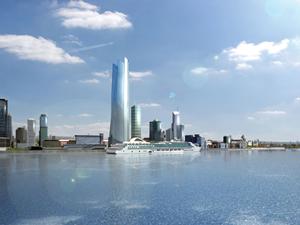 We have an opportunity with Peel. Few cities are quite so fortunate. Their plans are not perfect yet and, God knows, Mann Island is far from ideal. But it’s breathing life back - with galleries and shops and flats in a once windblown corner of town.
But we get the feeling that it’s a short window of opportunity. If we’d have dithered just a year longer, what’s the betting Liverpool ONE would never have happened? Ask Preston.
“A city wishing to compete for attention in the global market place needs to undertake a wide-ranging audit of all the qualities that differentiate it from others,” says Price Waterhouse Coopers, in their extensive Cities and Local Government Network initiative.
To compete on the world stage, they say, cities need to have a clear understanding of where they’re heading. Not where they’ve been.
“The ‘experience economy’ is an increasingly important concept in understanding what makes one city different to another. It’s about the emotions people experience when they spend time in a particular place. Creativity – the bedrock of the experience economy – cannot be ‘bought in’. Instead, city planners have to tease out their city’s unique qualities, and invest in nurturing and developing them.” You just can’t have an ‘experience’ in a look-but-don’t-touch museum.
There is no single plan for creating a successful city brand, they say. Instead, cities need to ask what will attract the attention of the world to their city and, more importantly, what will keep it there?
Our World Heritage Site will continue to attract day trippers and cruise liners. But it won’t attract investment, and it won’t create new jobs. In short, it’s the city’s soul we need to support and nurture. Not its skyline.
Barcelona is blessed with UNESCO status for its collection of works by Gaudi. But it relentlessly pushes forward - its plans for the next decade are simple: “An economy based on the development of a value added and innovative culture depending on the growth of new industries: such as audio-visual, design and creativity.”
If you visit Barcelona you can feel that call to arms everywhere you go in the city. It’s visceral. And it’s something you can feel here, too. Oh, and nowhere in its 15 year strategy document does Barcelona mention it’s lovely old town. Nor its UNESCO heritage.
Does Barcelona think twice about investing in a gleaming new skyscraper next to a curvaceous Gaudi apartment block? No. Does Beijing worry that some of its finest, UNESCO listed teahouses and temples are huddled within a labyrinth of neon-bathed bar streets? No. If anything, the juxtaposition only serves to strengthen these historic touchstones set within a restless city.
There is a whole world of competition out there - and UNESCO adds another 30 or so World Heritage Sites to its list every year. If Liverpool really wants a future, it needs to look to it without fear. We’ve been shrinking for too long. We need to start growing again.
If we were ever given the job of re-branding the city (yeah, unlikely), we know what our slogan would be:
Liverpool - Continuity through change.















 RSS
RSS
[...] with this is a distrust of developers for exactly the problems Seven Streets mentions: defacement of old buildings before they can be listed is a standard tactic nationally by [...]
[...] know we’re well and truly on the UNESCO naughty stair (but what a stair. It’s got that beautiful worn patina of age, and is authentically [...]